

Roadmap of Twin Transition in Textile industry – draft version
The working group of experts of the GDT Textile project offers for expert discussion the 1st version of the Roadmap of the Twin transition of the Textile industry of Ukraine (hereinafter simply – Roadmap). This Roadmap was developed during November – December 2024 and is the result of strategic sessions of the Working Group (WG) and separate analytical works, which are reflected in the corresponding report regarding the state of SMEs in the Textile industry.
This document is open for discussion, feedback, and improvements. Offline discussions will take place at the conference on December 17 in Kyiv, and final revisions with details will be made by the end of December 2024.
A roadmap is a strategic planning tool that describes the key directions and stages necessary to achieve goals in a specific area, in this case, the digital and green transformation of the Textile industry. A roadmap usually serves as a reference point that allows industry participants to understand priorities, implementation timelines, and the relationship between the various components of change. Roadmaps typically include a description of the overall direction and desired state, time horizons, key drivers and areas of change, progress indicators (metrics), and recommendations for action.
Compared to detailed medium-term strategies, Roadmaps focus more on “what is to be done and in what direction”. In contrast, strategies focus on “how exactly to do it”, with clear instructions, budgets, responsibilities, and schedules. Thus, the roadmap is the foundation, and the strategy is its specification.
APPAU has positioned a Roadmap as the primary strategic instrument of digital transformation in an enterprise or an Industry since 2018. In the Industry 4.0 strategy project, we envisioned creating at least 5 Roadmaps in Ukraine in key sectors strategic for the economy — food industry, mechanical engineering and engineering, defence industry, energy, and metallurgy. However, they were not adopted by the stakeholders, as in most of the proposals for this project. In the following years, APPAU expert groups independently developed several position documents, among which are still relevant as guide to the development of road maps and, for example, the “Ukrzaliznytsia” digital transformation Roadmap project, both dated 2019.
Thanks to the support of the UNDP, work on developing an industry roadmap will begin in Ukraine for the first time only in 2024. Unlike previous years, this development is characterized by a significantly higher level of stakeholder consolidation—more on that later.
Roadmap development methodology in the GDT Textile project
The WG on the development of the roadmap included managers and experts of leading national associations (Ukrlegprom and APPAU), 2 clusters (Podilskyi Fashion Cluster and Circular Economy Cluster, both members of Ukrainian cluster alliance), 2 EDIHs (Clotex from Khmelnytskyi and KyivHitech from Kyiv, based on the leading universities of these cities), the Institute of Economics and Forecasting of the National Academy of Sciences, as well as the leading enterprises of Textile industry – Gypanis, Edelvika, Inteltex, Lectra-Ukraine.
In addition to the consolidation factor, the Roadmap development methodology includes the following important features.
- Integration of the best European practices and methods (in particular, ADMA and SIRI)
- Several benchmarking analyses and studies of European programs (in particular, the Textile pathway and the results of the Twin Revolution project)
- Broader and progressive integration of stakeholders in discussing the future of the textile industry is achieved through a series of online and offline discussions.
Instead, the methodology considers APPAU’s previous developments and the Industry4Ukraine platform. In particular, the 2020 guide “Instruments of industrial policy» makes several important recommendations.
Thus, the general framework of the Roadmap Textile industry is presented in Fig. 1
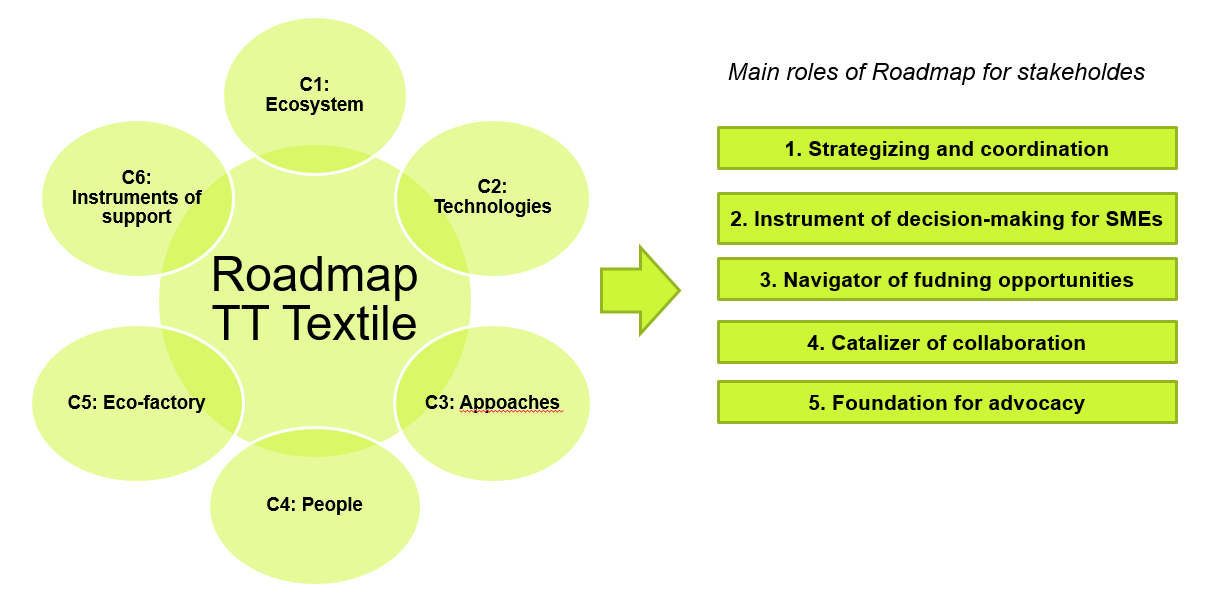
Fig 1. Roadmap framework of Twin Transition for the Textile industry
Next, we will briefly go through each Component (C1-C6) presented in the framework and consider the main guidelines for 2025-27 proposed by the Working Group.
This component offers a European vision of the industry as an industrial ecosystem, where the main value-added chain is highly integrated, on the one hand, with the innovation ecosystem and its elements and, on the other, with policies and regulatory instruments that strengthen these links and overall integration. In this Roadmap, greater emphasis is placed on developing the innovative ecosystem and its connection with the Industry value chain.
The main factors are the analysis and development of strategic options according to models of industrial high-tech innovation ecosystems from 2019. The main factors (drivers of development) here are the so-called complex elements (technology parks, laboratories, incubators, etc.) and soft elements that stimulate cooperation between industry stakeholders (the level of networking and matchmaking, the culture of collaboration, the level of market education...).
The current state of the ecosystem: there are practically no “solid” elements in the Ukrainian Textile industry - incubators, accelerators, there are no strong research institutes, R&D centres or technology parks. EDIHs are just entering the arena, and in general, the interaction between universities, research centres and businesses is weak. There are three regional clusters, but they operate separately. "Ukrlegprom" as an industry association does not yet have a Twin transition agenda. There are no international partnerships with leading textile innovation centres. See the link for a more detailed analysis of the current state, including benchmarking.
Key development initiatives for 2025-27:
| # | Elements | Key events |
|---|---|---|
| 1 | Solid elements of the ecosystem (infrastructure) |
|
| 2 | Soft elements |
|
| 3 | Specialization, cooperation, and networking |
|
This component is key to triggering systemic changes in the industry. By consolidating and strengthening the collaboration of key stakeholders, the implementation of changes indicated in all other components below can be accelerated.
The general context of this component for SMEs in Ukraine is determined by the dominant factor of industrial modernization—that is, the possibilities and capabilities of purchasing modern technological equipment. Usually, this is the area of enterprise capital investments to which the main attention of SME decision-makers is drawn. Digital technologies or green innovation are far behind—and this is, of course, a challenge.
The main factors: we have identified three drivers of development in this area
- Rapid modernization – about how production equipment and technology can be rapidly modernized; this direction of change is evident given the needs of the industry.
- From 2.0 to 4.0: determining the directions of transition to the 2.0-3.0 to 4.0 system
- Mass customization of products and services: using the approaches and vision of Industry 5.0, which is now on the agenda of the EU - here, the foundation of 5.0 is laid.
Current state: according to the ADMA survey done in the project, modernization of technological equipment is priority #1 of Ukrainian enterprises. The textile industry is dominated by suppliers from China and Turkey equipment providers; at the same time, there are no detailed studies on suppliers' market share and the priorities of SMEs in procurement. It is known that purchasing modern equipment is problematic for most SMEs, which rarely use available financial instruments. European, modern equipment is purchased by medium and large enterprises, which are also characterized by the presence of more qualified personnel. As for implementing modern digital technologies - the first analytics GDT Textile shows that the industry lags in Europe and many Ukrainian sectors.
Key development initiatives for 2025-27:
| # | Elements | Key events |
|---|---|---|
| 1 | Production technologies |
|
| 2 | From I3.0 (PLC-SCADA-ERP) to I4.0 technologies |
|
| 3 | Mass customization and federation platforms |
|
Additional comments on the factor "from 3.0 to 4.0."
- As the Analytical Report of the project points out, many customers in Ukraine still ignore the risks of using the 1C accounting program of russian origin (which is still used by tens of thousands of SMEs). The fact that there are at least 5 Ukrainian substitutes on the market. Therefore, a mass transition to products of Ukrainian origin, with a simultaneous upgrade to a mini-ERP (there are also such proposals), is a "matter of honour" of advanced stakeholders, and a large part of them should be mobilized around this task.
- Regarding KET (Key Enabling Technology) for the Textile industry, there are a lot of open issues where the involvement of advanced providers and developers is very much needed. The WG of the project has not yet managed to sufficiently clarify the potential and positions of local developers and integrators, their views on the introduction of technologies such as AI, additive (3D), AR/VR, new materials and recycling, blockchain, and similar ones in the Textile industry of Ukraine.
- Instead, thanks to the ADMA methodology, two technological priorities of medium and large enterprises are clear in the surveys of the 1st stage of the project - 1) the use of the CAD-CAM-CAE / PLM-PDM product class should be much wider and large-scale, 2) similarly, there is a great need for dispatching and production management systems (MOM-MES), including modern ICT technologies.
In this area, developers focus on analyzing existing and prospective trends in production management, business models, and technical standards.
The main factors: 3 key factors are proposed - drivers of development
- Digital Lean is the integration of classic Lean with digital technologies
- XaaS - Anything as a Service, with a focus on "Manufacturing as a Service" (MaaS)
- Other business models - promotion of other advanced business models
The current state in this field is that classic Lean (lean production) is spread among approximately 5% of medium and large enterprises in the industry. It is not integrated with digital technologies practically anywhere - these are parallel implementations, while in developed countries, Digital Lean looks like a stable trend for a long time. Several enterprises (such as K.tex) and clusters in textile are talking about new business models in the industry. For example, there are some pilot projects for the introduction of sharing manufacturing capacities in the Western Ukrainian and Podillya fashion clusters. At the same time, all these projects lack a clear systematization and strategic perspectives.
Key development initiatives for 2025-27:
| # | Initiatives | Key events |
|---|---|---|
| 1 | Lean production |
|
| 2 | XaaS (Production-as-a-Service, Maintenance-as-a-Service) |
|
| 3 | Other new business models |
|
This category has a certain contradiction between the applied European methods and Ukrainian realities. The first ones focus on increasing the role of people in the management of modern productions by meeting their needs (technology is for people, not the other way around). They create autonomous, strong teams that generate initiatives and innovations from below, constantly learn, and have the appropriate authority to make independent decisions, etc. The realities of a country suffering from the consequences of war are different to the appropriate parallels from Maslow's pyramid — we are talking about the priorities of basic survival, where #1 remains the lack of personnel at all levels. That is, enterprise managers are now unable to satisfy the individual needs of each employee, which is imposed by Industry 5.0 — the priorities are rather classical from 2.0-3.0 (focus on economic indicators of enterprises) and in crisis conditions.
The main factors: taking into account this context, the WG looked for factors common to different maturity levels and relevant to the crisis state of the economy. They are:
- Reskilling-Upskilling - regardless of 3.0 or 5.0, the issues of retraining and retraining are top-level, and all managers understand that changes are needed here. At the same time, the proposed Roadmap focuses precisely on the new skills required in the era of Industry 4.0-5.0.
- Organizational changes — we are talking about a set of measures that should change the organization of enterprises from the inside, primarily about the structure of the enterprise, as a factor of quick victories
- Innovation culture and adaptability in contrast to the previous factor, here it is more about mentality and outlook, so changes here will take place more slowly, but they are extremely necessary.
The current state of the ecosystem: today, the field is dominated by classical training for labour professions, which fully corresponds to employers' interests. At the same time, there is practically no training in 4.0 technologies - this is done only by some vendors and providers of Western technologies. There are also no industry-wide competency standards for new technologies. Dedicated specialists (departments) are responsible for the Twin transition, and relative strategies are exclusively in some large enterprises. In general, 90% of SMEs are focused on survival, not on innovation or adaptation, and the level of employee involvement in decision-making processes is low — most managers do not consider it necessary; it is enough to have cohesive teams of top and middle management.
Key development initiatives for 2025-27:
| # | Elements | Key events |
|---|---|---|
| 1 | Reskilling-Upskilling |
|
| 2 | Organizational changes |
|
| 3 | Innovation culture and adaptability |
|
The general context of this component is characterized by a large fragmentation of numerous initiatives, with a complete lack of priorities and clarity within strategic frameworks. Ukraine generally strives to meet the European green transition, and the number of actors in this field, including those related to the Textile industry, is growing yearly.
The main factors: The WG identified 4 key factors drivers of change and development
- Circular manufacturing is the main approach to implementing the principles of the circular economy
- Energy efficiency is a factor that is obvious given the general problems of energy independence of the State and significant losses of generating capacities due to russian attacks
- Clean materials and resources are also a European trend, one of the key ones, given the problem of waste management in this industry in Ukraine
- Digital product passports (DPPs) – this element combines the capabilities of technologies but is based on changes in the regulatory environment. By and large, DPP is part of circular, clean production; we have singled it out because of its importance and criticality in compliance with the European course.
The current state of the ecosystem: There are already separate pilots for waste processing and disposal in the textile industry, and the total number of identified implementations is small: up to 10-20 for the entire country. There are no large-scale initiatives or mandatory requirements for the circularity of production. Regarding the energy industry, large enterprises depend on the schedule of power outages. Several enterprises have carried out the transition to full autonomy. There is no obvious problem for small enterprises yet - they have provided critical areas with fuel generators. In the industry, the issues of the infrastructure of the quality of products and raw materials are acute, and there are many fakes and materials of unknown origin. Even though the DPP is already being discussed in the government, where relevant orders are being adopted, no large-scale initiatives or pilot projects have been identified. In general, SMEs do not have the technical basis for automatic data collection and integration into the DPP.
Key development initiatives for 2025-27:
| # | Elements | Key events |
|---|---|---|
| 1 | Circular production and waste management |
|
| 2 | Energy efficiency |
|
| 3 | Clean materials and resources |
|
| 4 | Digital product passports |
|
This component is the most difficult for the Working Group. The main obstacles are the lack of quality analytics on SME support tools in general and at the sectoral level in particular, as well as the lack of clear and high-quality State strategies for the twin transition of SMEs.
The main factors: WG defined 4 factors — drivers of change and development
- Instruments for supporting the digital transformation of industrial SMEs (and, separately, green and innovation policy) – here, it is important to mention the instruments for support and development of industrial SMEs at the State level, as well as from international organizations. We are talking about both existing tools and promising ones.
- The development of non-state Institutions—a big and special focus on this component is due to distortions in the past. A whole series of analytical materials of APPAU and Industry4Ukraine from 2019-21 prove that "Institutions are more important than Instruments” and also argue why focusing on non-states regarding sectoral or sectoral programs is necessary.
- Integration into the EU is a very important factor that considers both our dependence on various EU support programs and funds and the integration course as our obligations.
Work on this component is still ongoing. As mentioned, it is difficult to understand what is there, what works, and what is needed for the next three years. Therefore, any help to our WG is welcome.
Looking forward to expert involvement - on December 17 and beyond
These proposals are in the “draft” status – i.e., the 1st version, which needs significant revisions in some areas.
- Subjectivity — a better definition of stakeholders who take responsibility for the implementation of the Roadmap, including State institutions
- Balance — currently, the map includes nine initiatives in the “Technology” component, 6 in “Approaches and business models”, 16 in the category of Human capital, 20 – in the field of Environmental and green transformations, and 19 – in Innovations. At the same time, many initiatives in non-technological areas are directly related to digital transformation. Is this balance optimal?
- Cross-connections, integration, and optimization—Many initiatives directly relate to existing or future donor programs, international programs, etc. So, how can we link, integrate, and optimize them?
- Profiling and scaling—similarly, many initiatives require better specification and a clearer or more understandable presentation, considering existing developments, and some may already be scalable.
The “Instruments” zone is still under development and needs special attention.
So, the WG is aware of these areas for improvement, and at the same time, WG’s capacity to make rapid changes is almost exhausted. Therefore, we would be glad to have the broad involvement of governmental and international organizations, specific support from donors, experts from professionals in the digital and green transition, and the enterprises themselves: the main beneficiaries of this Roadmap. Please write to us at info@appau.org.ua
We also invite the most willing stakeholders to sign the Memorandum on cooperation in implementing the Roadmap in the “Alliance 3T” (Twin Transition in Textile). This coalition of business associations currently includes two associations, 2 clusters, and 2 EDIHs and is open for membership. The text of the Memorandum can be read at the link.
All partners will be at the conference on December 17 in Kyiv, and we will be glad to see all interested persons.
Alex Yurchak, CEO of APPAU
This publication has been produced within the framework of the Swiss-Ukrainian Project “Strengthening Business Associations of Micro, Small and Medium Enterprises in Ukraine”, implemented by the United Nations Development Programme in Ukraine (UNDP) in cooperation with the Ministry of Economy of Ukraine and with the support of Switzerland.
The contents of this publication are the sole responsibility of the author. The views of the author(s) do not necessarily reflect the views of the donor.